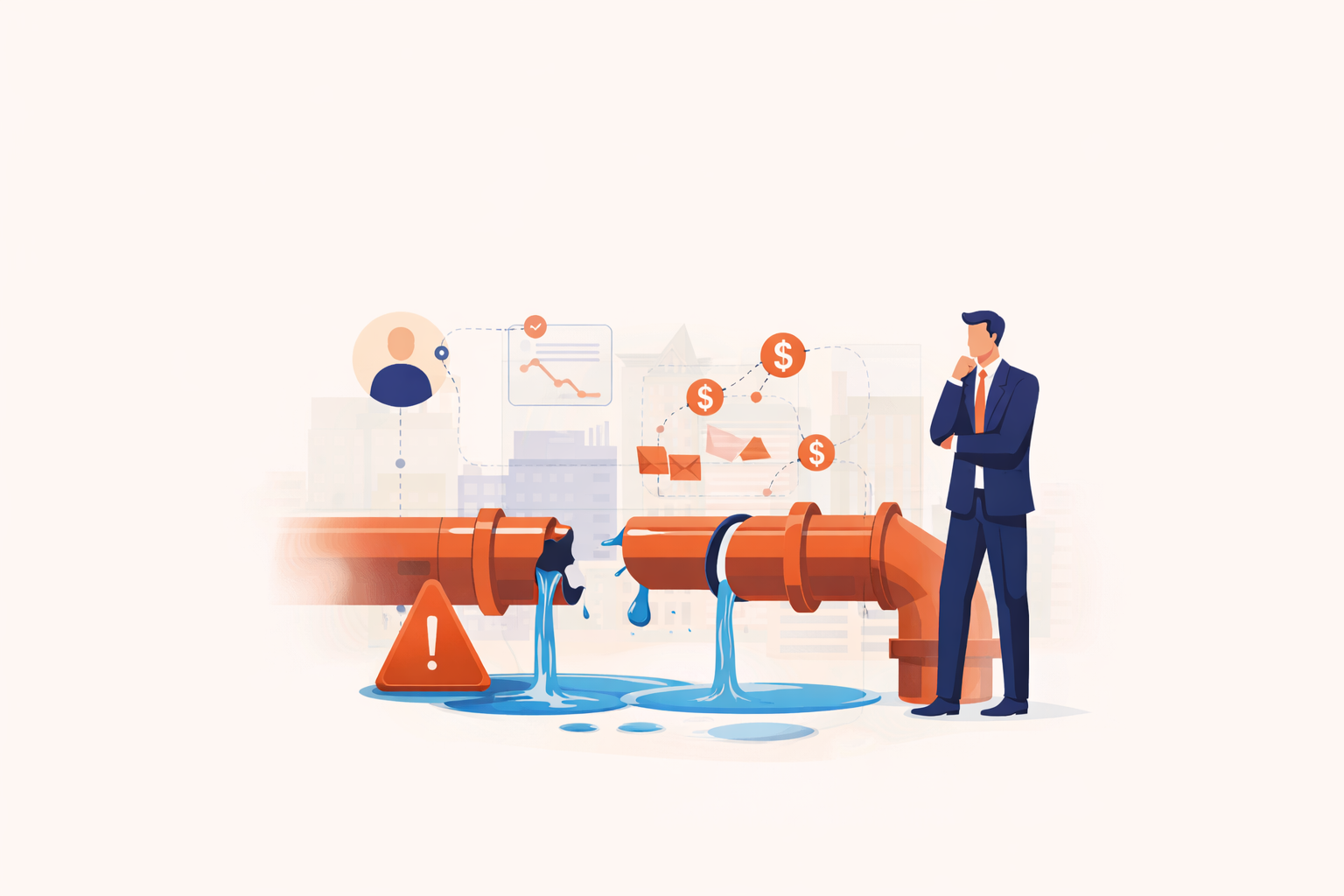
Most marketing doesn’t fail because it lacks creativity. It fails because it lacks clarity.
Businesses invest heavily in content, ads, social media, and campaigns, then wonder why the results don’t match the spend. The instinct is usually to do more: more posts, more channels, more budget. But doing more of something that isn’t working just accelerates the waste.
The problem is rarely the execution. It’s almost always the foundation beneath it.
The Clarity Problem
Marketing only works when it’s built on clear positioning. That means knowing exactly who you’re talking to, what problem they’re trying to solve, and why your solution is the right one for them specifically.
When that foundation is missing, the message becomes generic. It talks about features instead of outcomes. It describes what a business does instead of what a customer gains. It sounds like every competitor in the space.
When you try to speak to everyone, you end up resonating with no one.
Clarity isn’t just about simple language. It’s about specificity. A message that speaks directly to a defined audience, with a defined problem, will always outperform a broader message, even if the broader one is better written, better designed, or better distributed.
This is why two businesses with similar budgets can get completely different results. One has positioned itself clearly. The other is still trying to appeal to as wide an audience as possible, and in doing so, has made itself forgettable.
The Visibility Trap
Another major issue is mistaking visibility for demand.
Getting attention is not the same as generating interest. Generating interest is not the same as driving intent. And none of these automatically lead to revenue.
Many businesses chase impressions, follower counts, click-through rates, and engagement, then treat these as signs that marketing is working. Sometimes they are. Often, they’re just noise dressed up as progress.
The metrics that matter are the ones tied to outcomes: qualified leads generated, conversations started, conversions completed. Everything else is context, not proof.
Visibility has value when it reaches the right audience with the right message. Without that alignment, you’re essentially paying to be ignored at scale.
The Gap Between Marketing and Sales
Even when marketing is generating leads, many businesses run into a deeper problem: the handoff breaks down.
Marketing brings someone in with one message. Sales then has a completely different conversation. The prospect feels a disconnect. Expectations don’t match reality. Trust erodes before a decision is even made.
This is one of the most common and costly failures in growth strategy, and it’s rarely talked about as a marketing problem. But it is.
When marketing and sales are misaligned, leads don’t convert, and the blame gets passed back and forth between teams. Marketing says the leads aren’t being followed up properly. Sales says the leads aren’t qualified. Both are often partially right, but the root cause is structural: the message isn’t consistent across the entire journey.
Effective marketing doesn’t just attract attention. It sets accurate expectations, builds early trust, and primes the prospect for the conversation that follows. When it does that well, sales becomes significantly easier because the prospect already understands the value before the first call.
What Actually Drives Conversion
Conversion happens when three things are true at the same time: your message speaks to a problem the audience already wants to solve, it reaches them at a point when they’re open to acting, and it gives them a clear, low-friction next step.
Most marketing misses on at least one of these. Either the message is too broad, the timing is off, or the call to action asks too much too soon.
Getting this right isn’t about being more creative or spending more. It’s about being more intentional. It means understanding your audience deeply enough to know what keeps them up at night. It means building messaging around their language, not your internal vocabulary. And it means designing a journey that moves someone from awareness to decision without confusion or unnecessary friction.
Marketing as a Growth System
The businesses that get the most from their marketing aren’t necessarily the ones with the biggest budgets or the most impressive creative. They’re the ones that treat marketing as a system rather than a series of campaigns.
A system has inputs, outputs, and feedback loops. It’s designed to learn and improve over time. When something isn’t converting, there’s a process for diagnosing why, not just a gut feeling that leads to another campaign.
When marketing is built this way, aligned to strategy, grounded in clear positioning, and connected to the sales process, it stops being a cost centre and becomes a genuine growth engine. It attracts the right people, sets the right expectations, and creates the conditions for revenue to follow.
That shift doesn’t happen by accident. It happens by design.